Contemporary Landscapes - 2021
Contemporary landscape painting goes beyond the expectation of a truthful rendering of place. Nature lends the artist a prismatic theater of color that can be sampled, manipulated and transformed through personal interpretation. Landscape as subject matter easily allows the principles and elements of design to be strategically employed and maneuvered to provide a platform for expressing mood and emotion. Like much of the world, the artworld continues to evolve in the digital era, and has expanded into using computer techniques such as digital painting and virtual sensory experiences. However, this exhibit highlights three artists who paint at the very top of their field utilizing the more traditional or historical methods in their present-day contemporary art practice. I have made a point of selecting works that best represent each artistís personality and manner of working. The following remarks are based on my working relationship with them over many communications and studio visits during the past several months, and represent the essence of how I see each artist and their work.
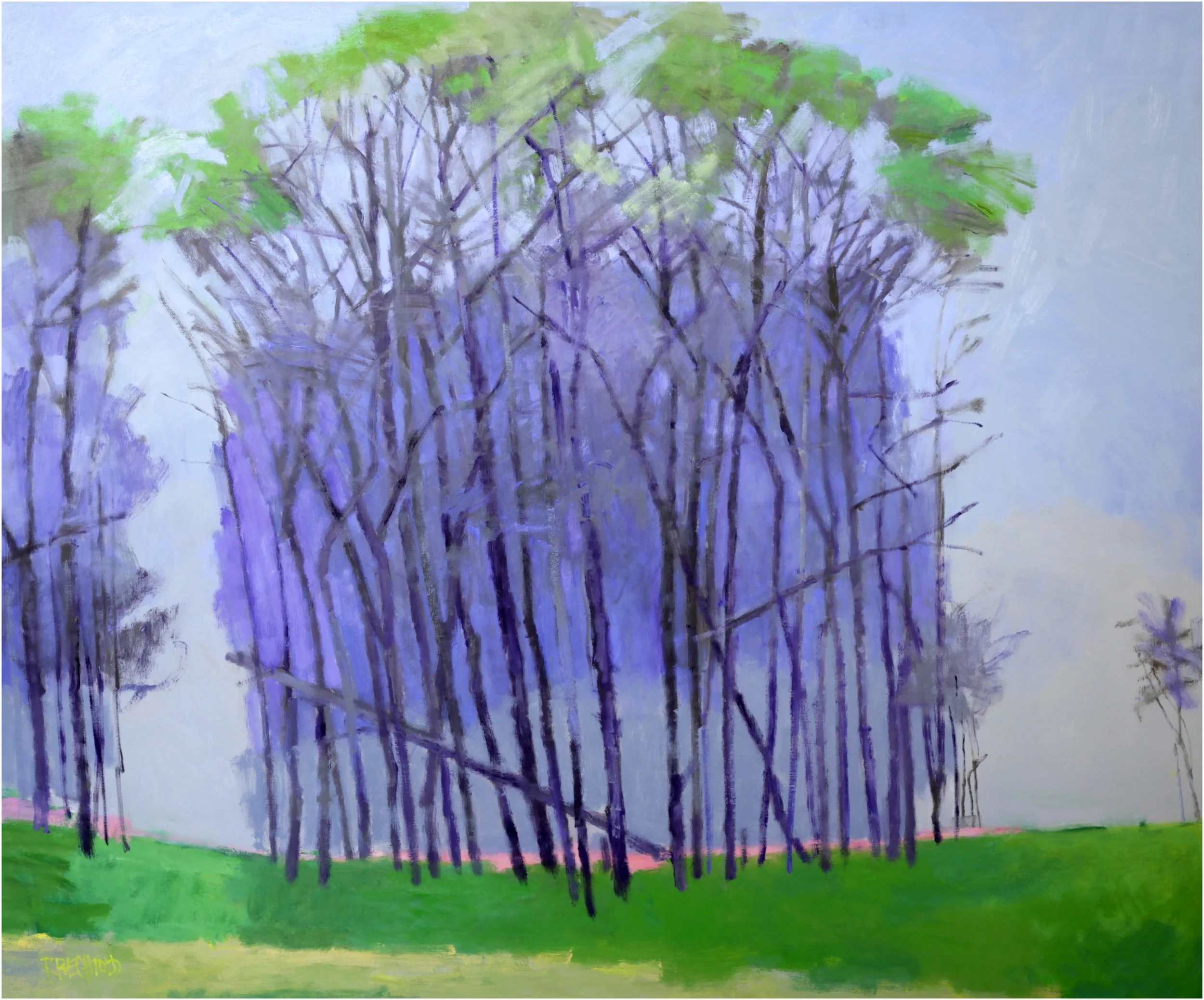
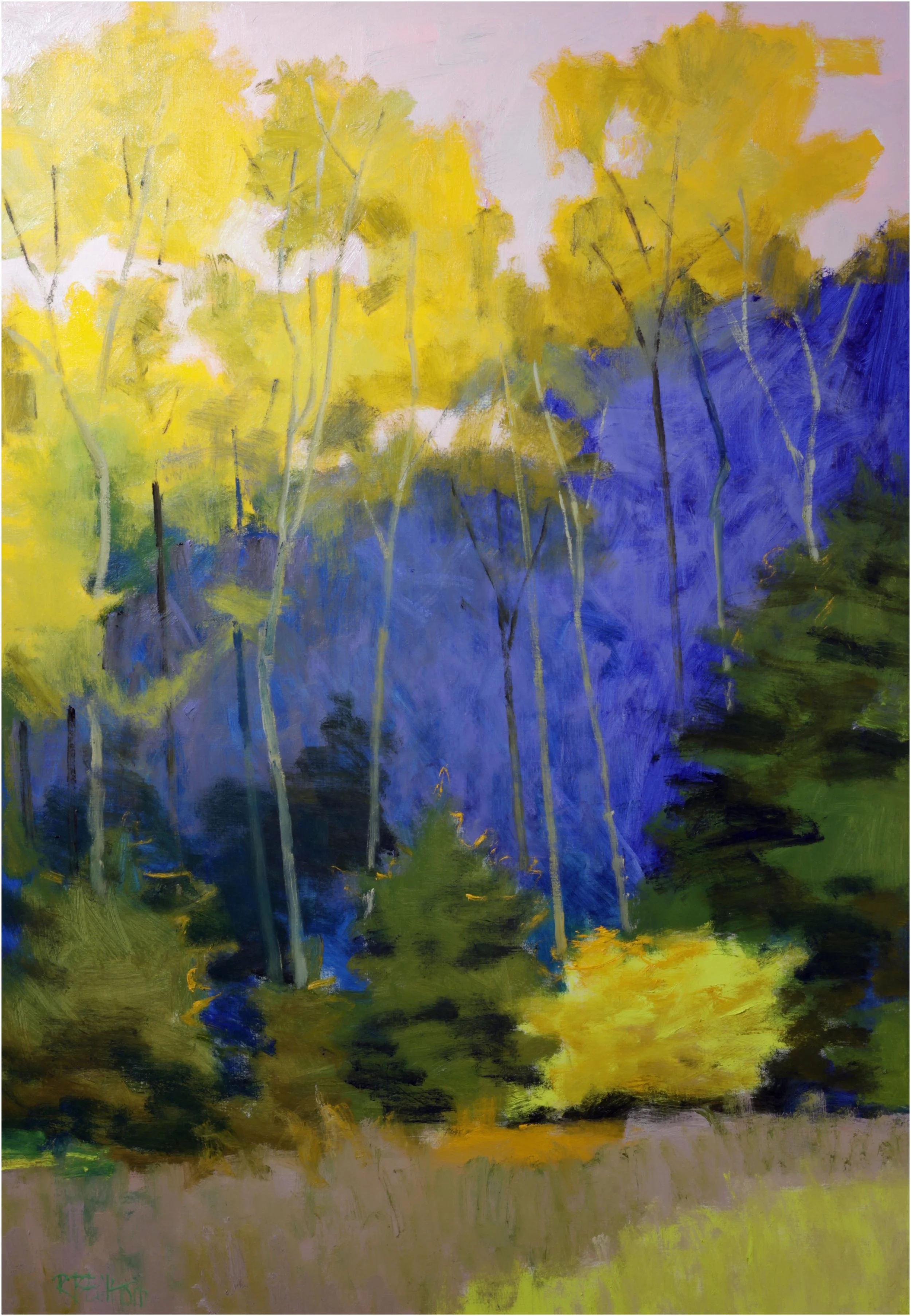
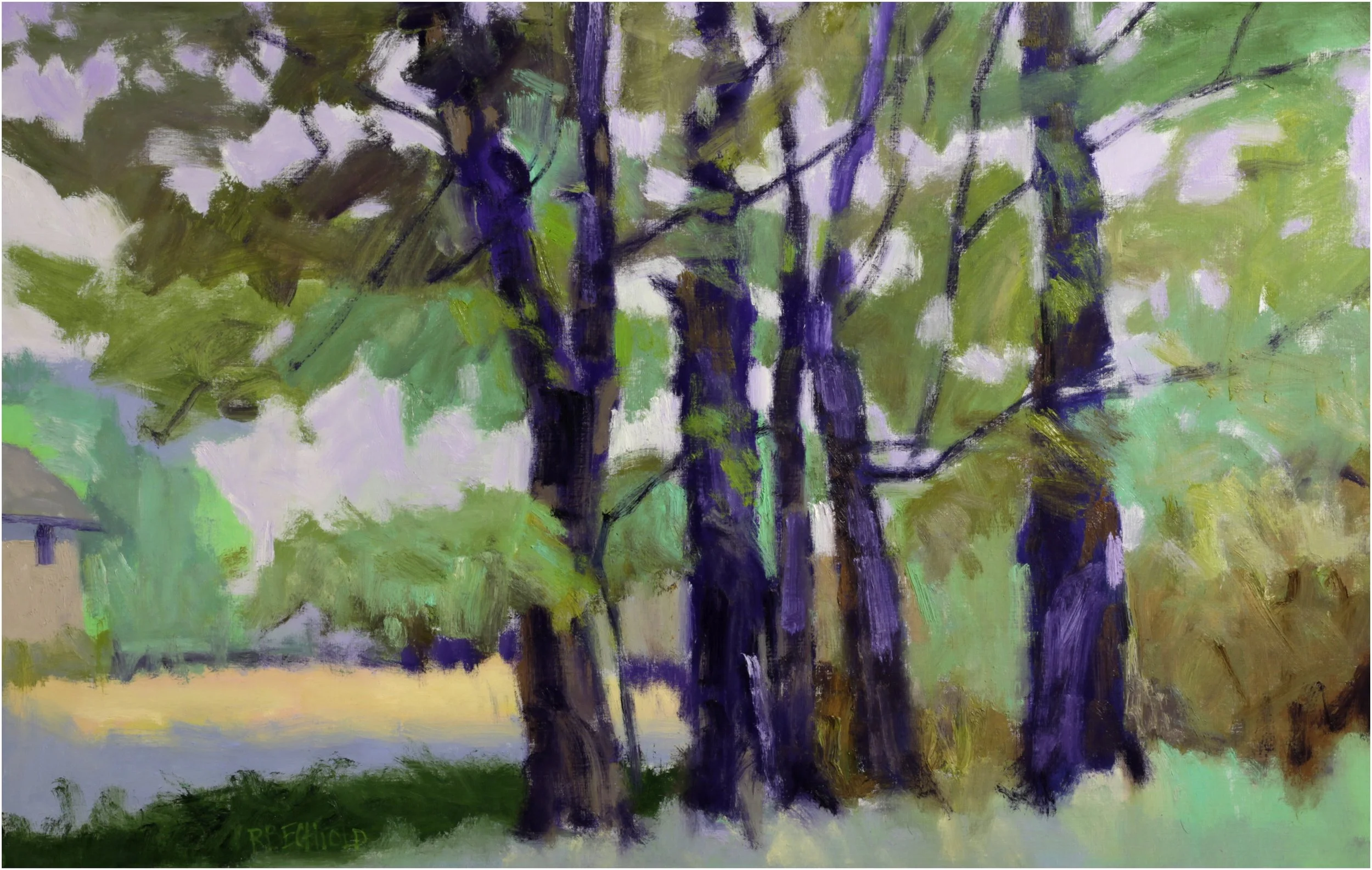
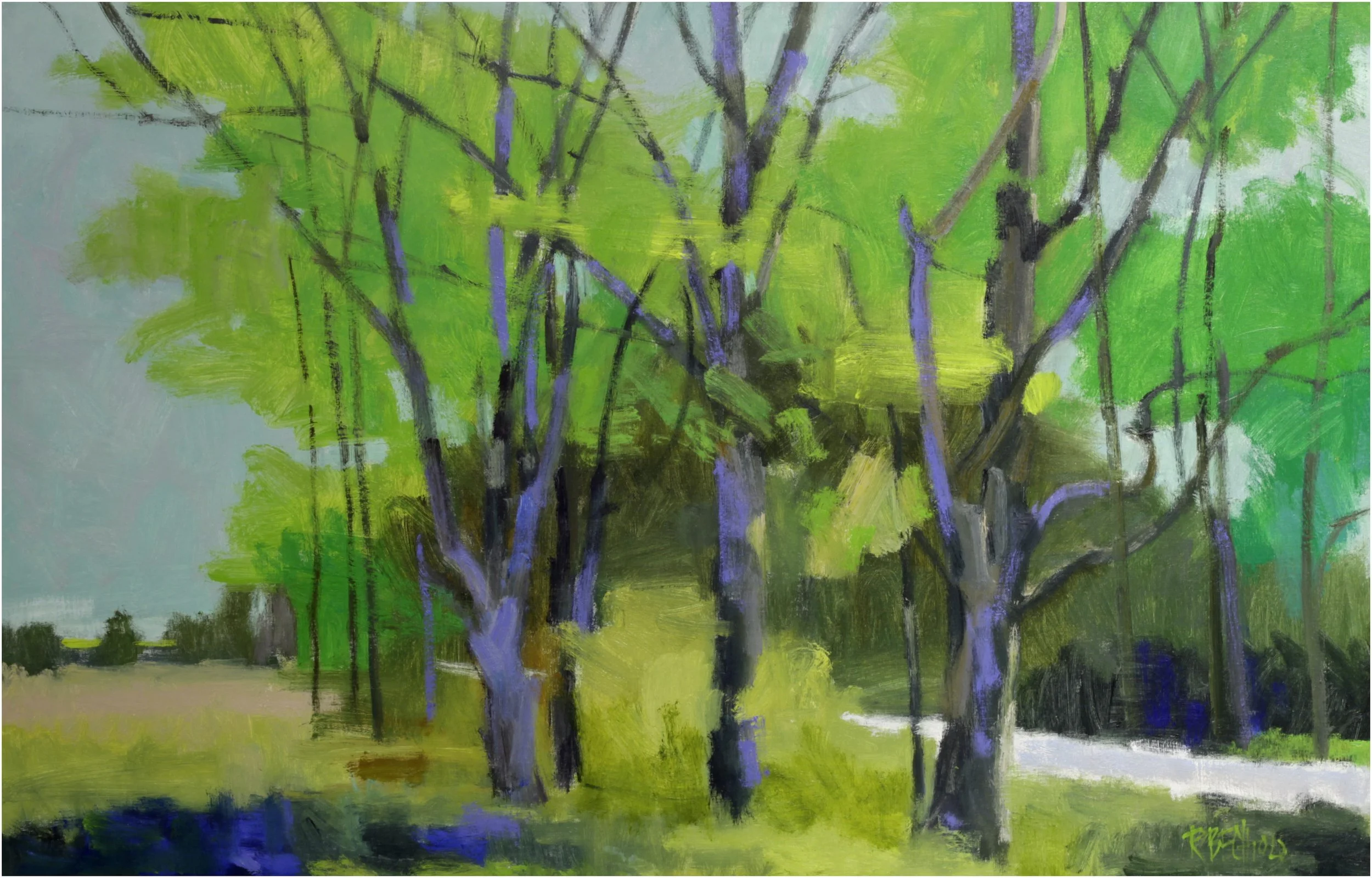
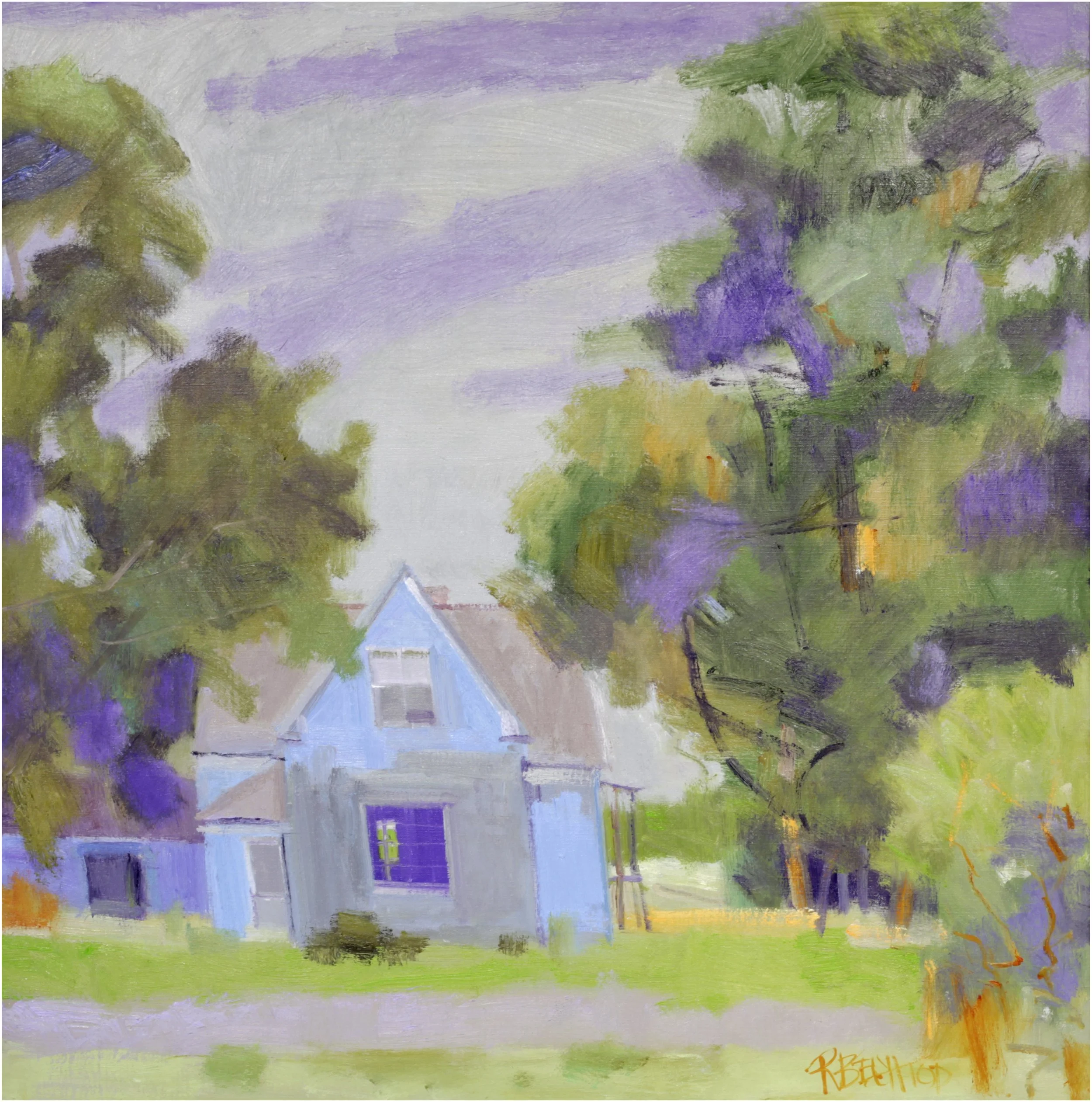
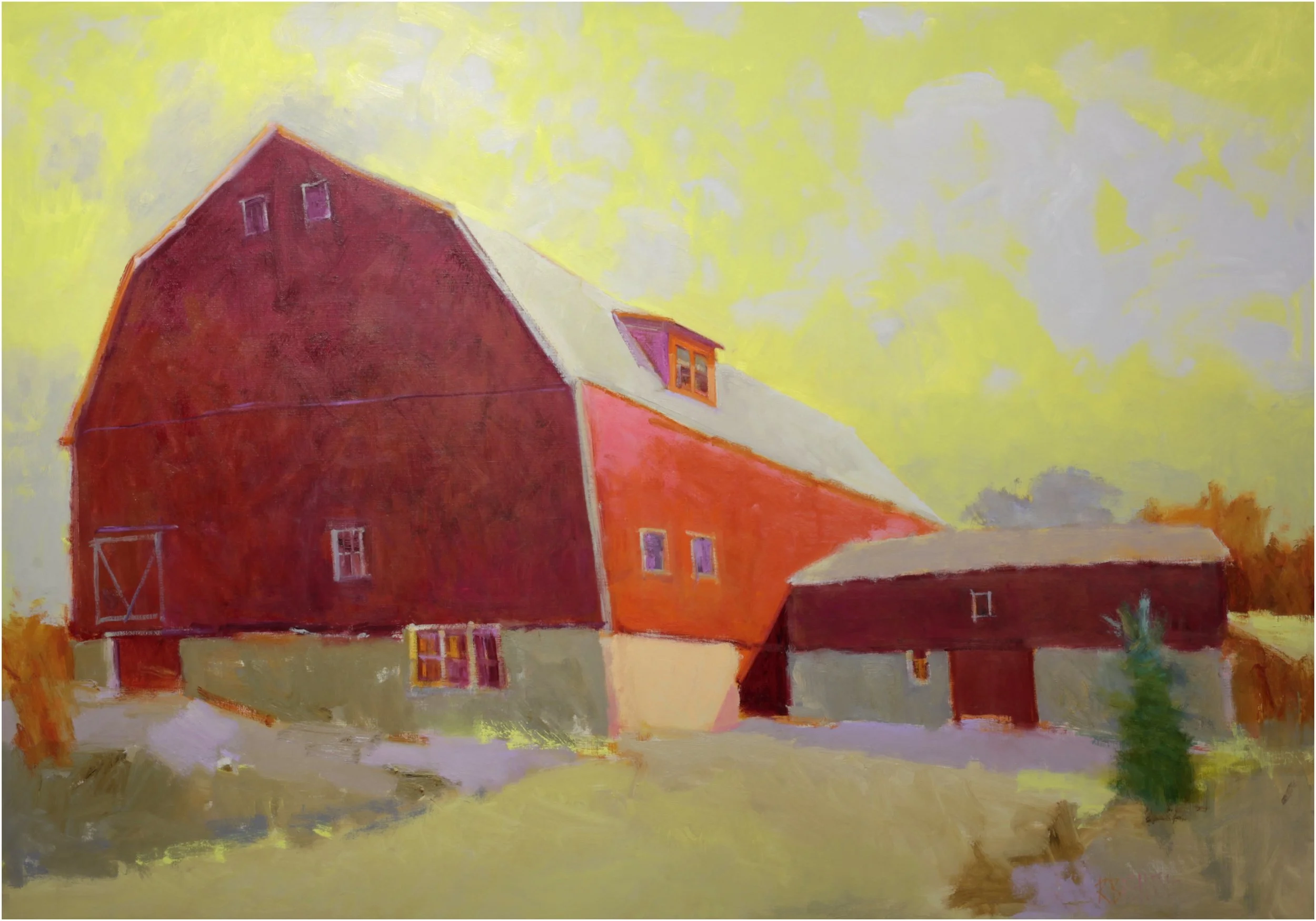
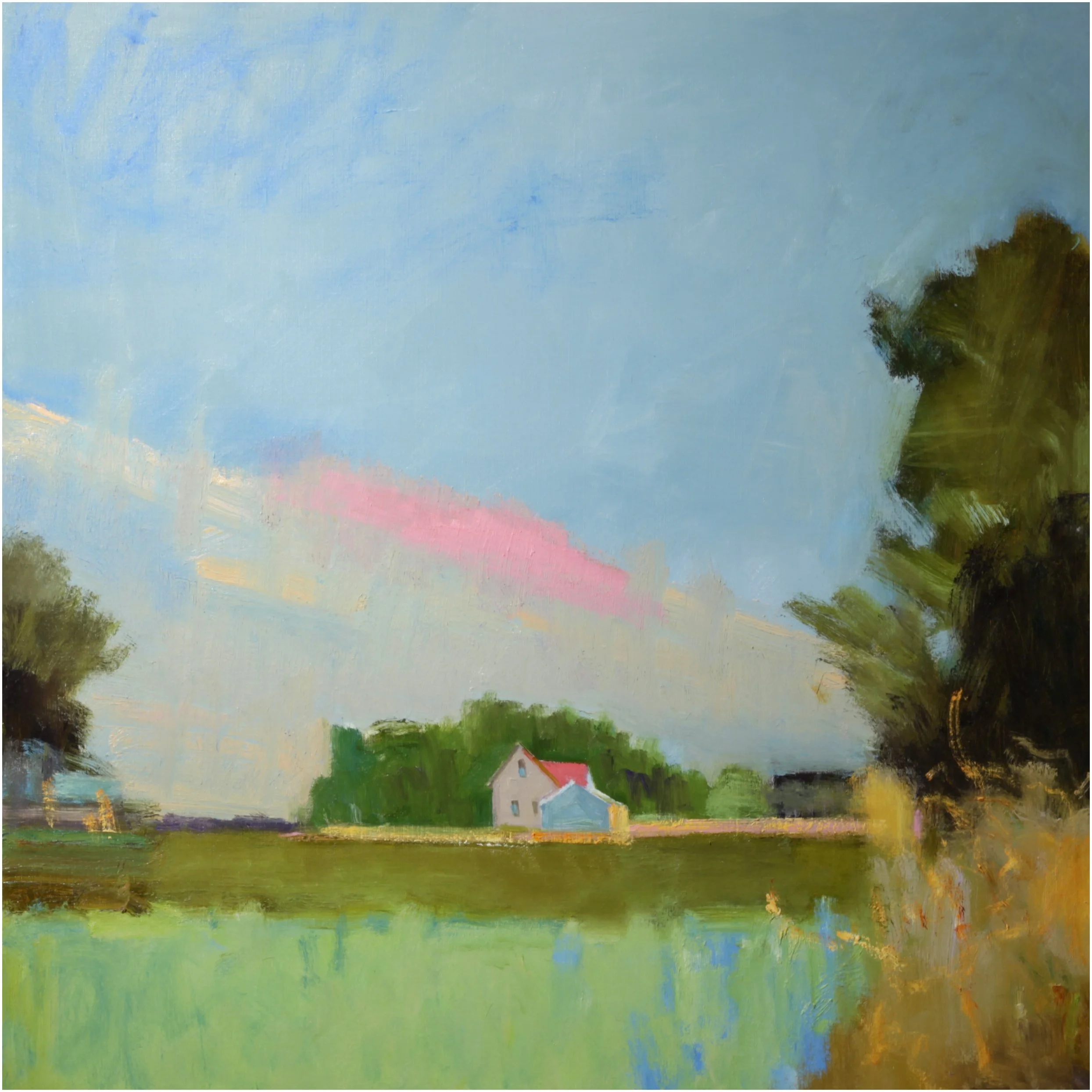
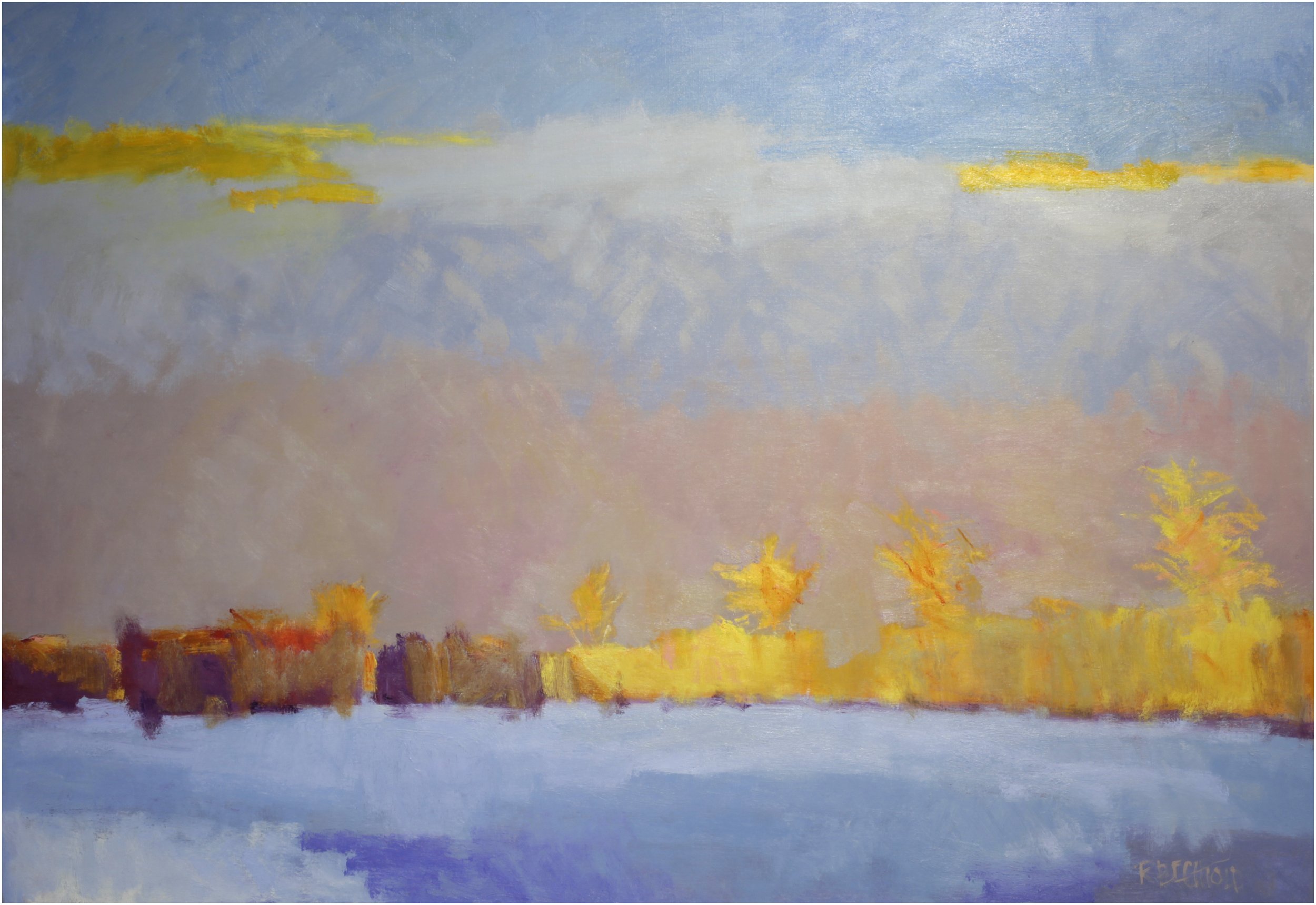
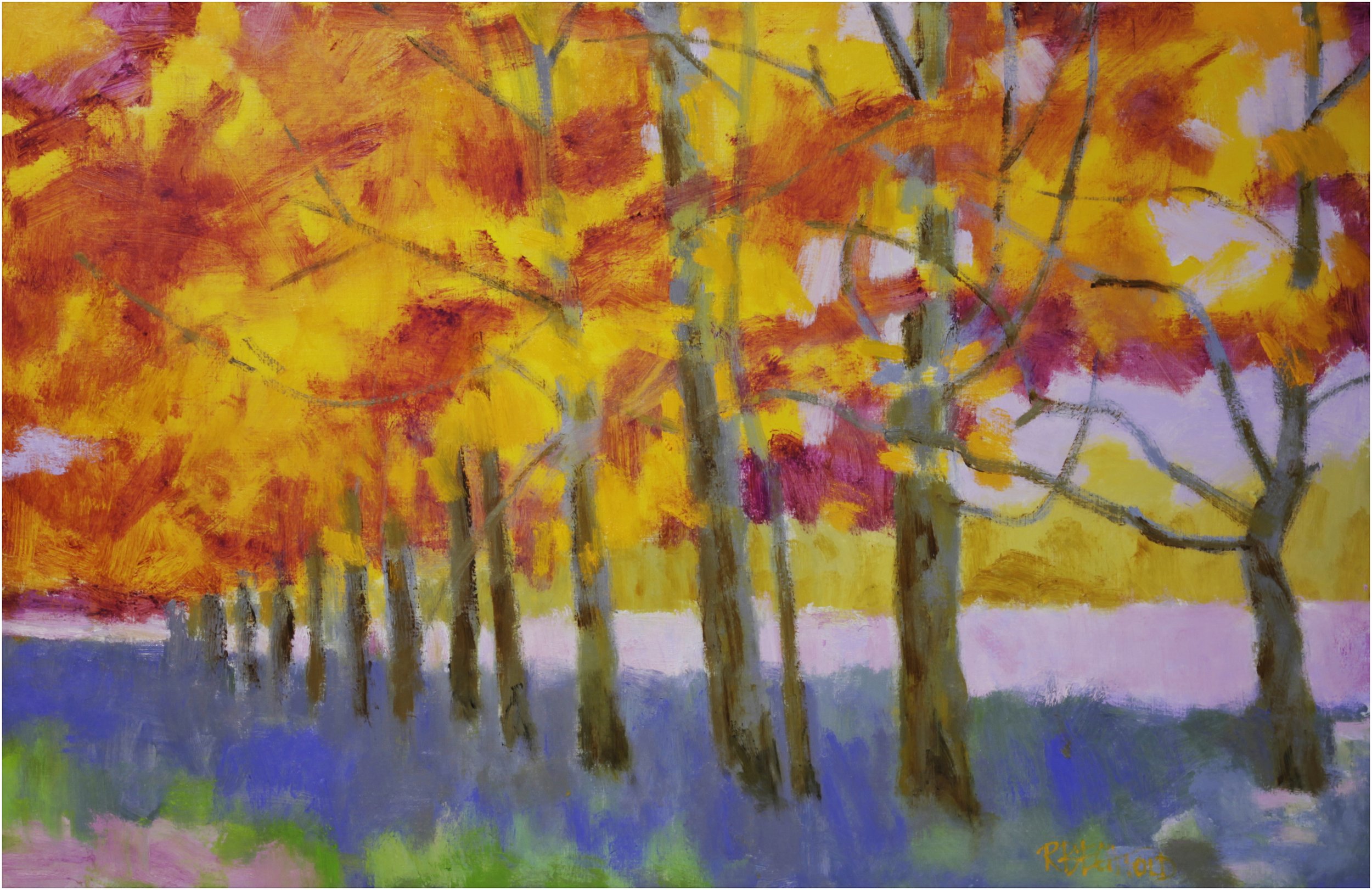
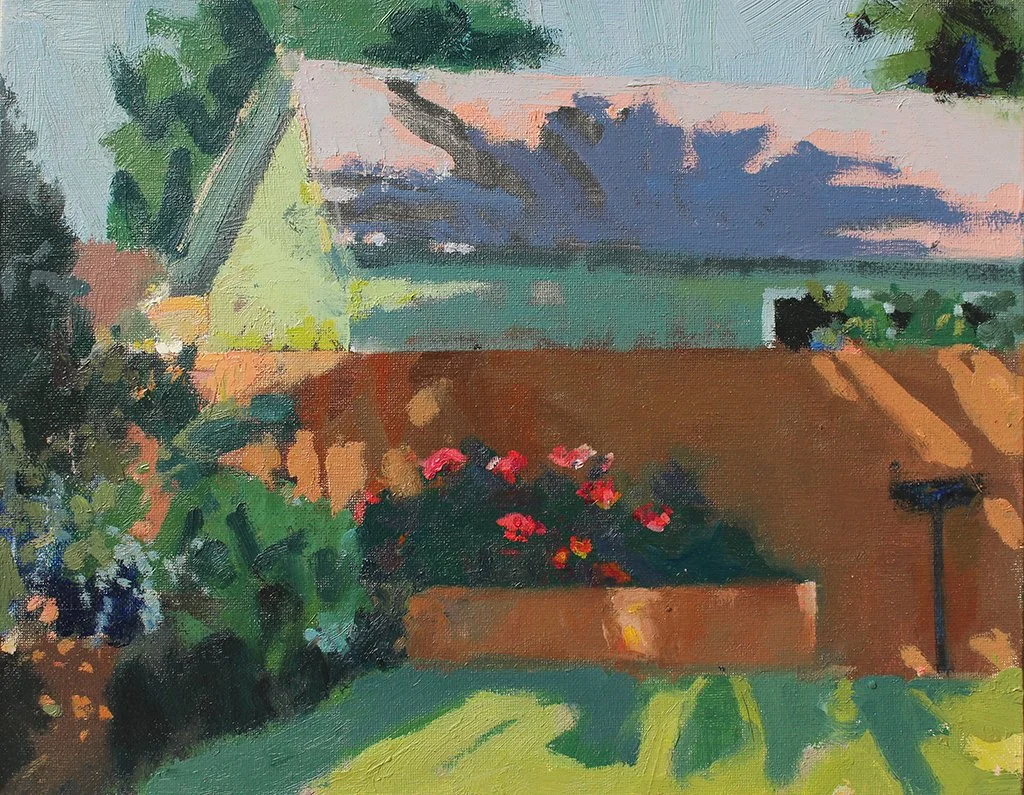
A seasoned artist, Rodger Bechtold enters into the process of creating a painting by intuitively reaching into his personal toolbox sometimes without looking at what he is grabbing, thus intentionally adding the element of chance to his process. Rodger’s paintings are loose, brushy, and catapult explosive color sensations at the viewer. Underlying his chromatic exuberance is a masterful sleight of hand, and an intimacy with every material inclusion in his paintings, from paint viscosity to brushstroke length and direction. I get the sense that Rodger is less interested in describing the landscape than he is in enjoying conveying the visual jolt of standing in front of it.
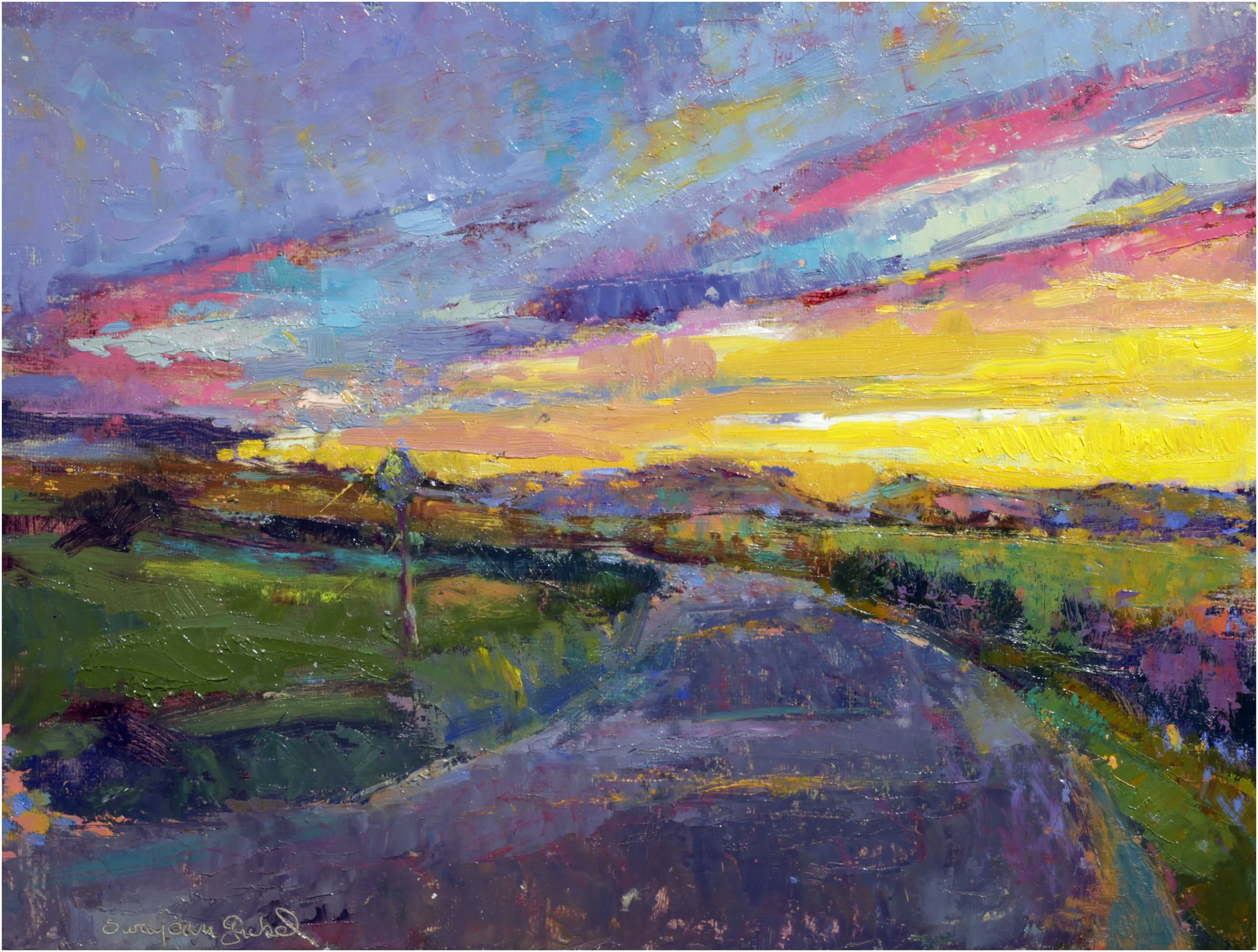
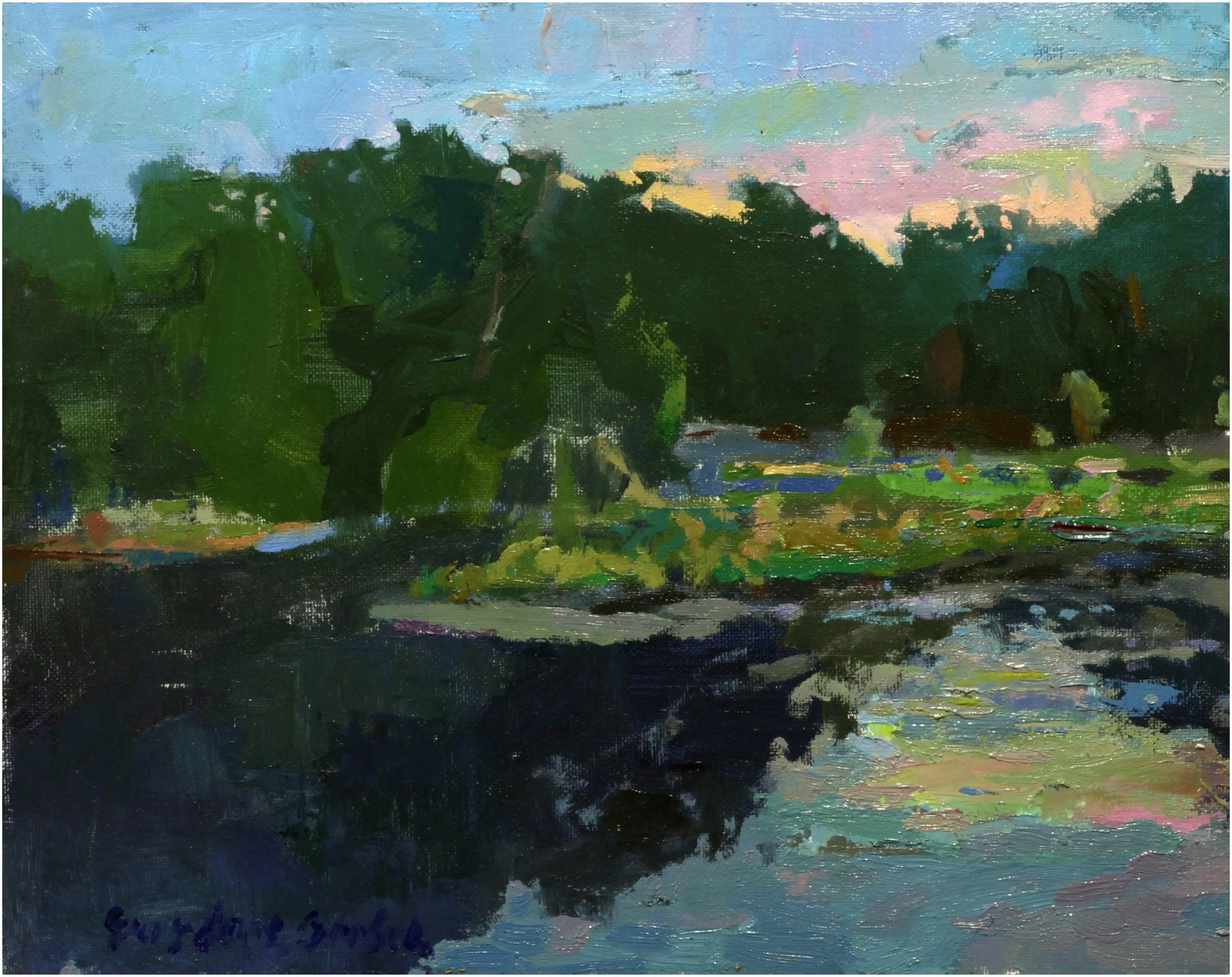
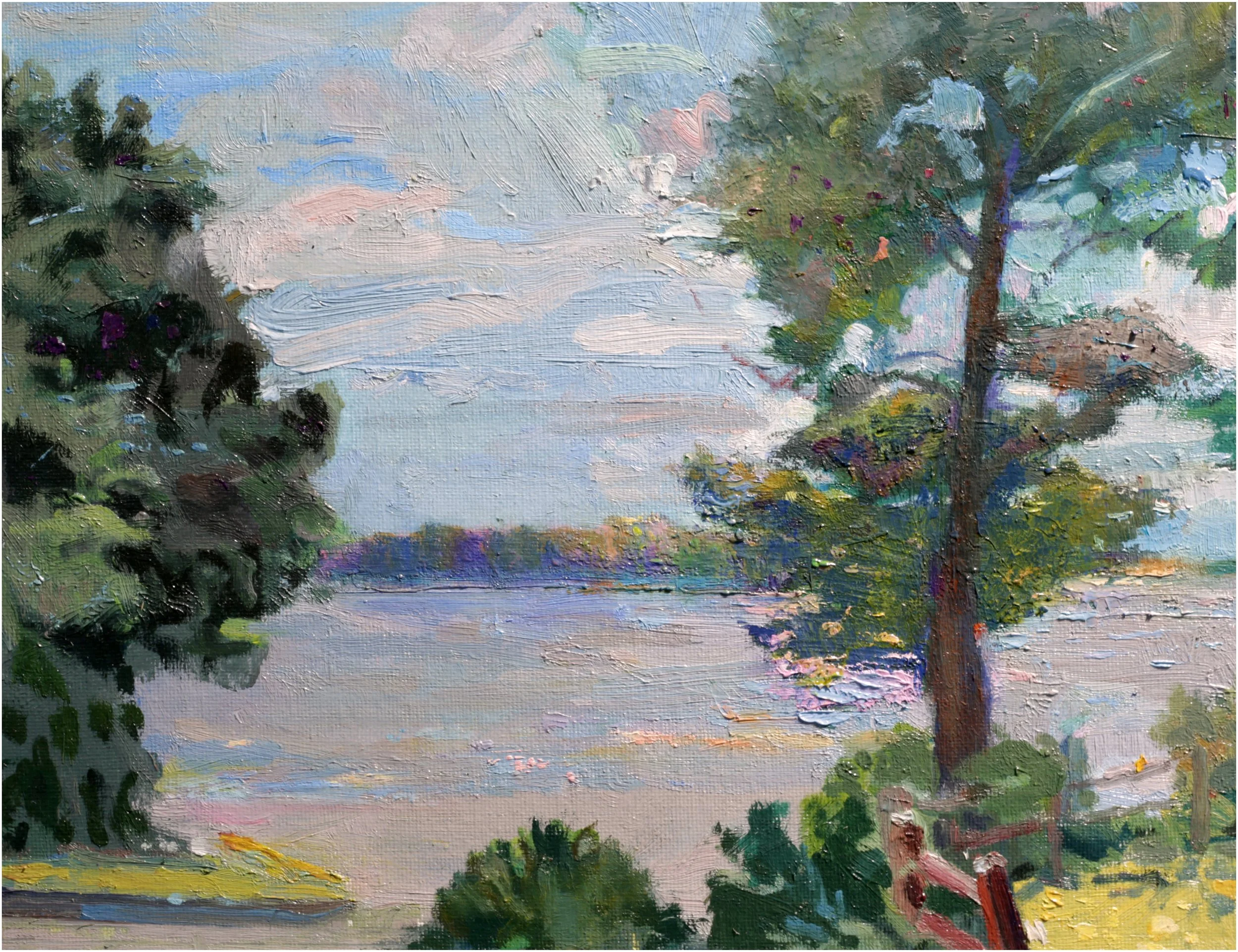
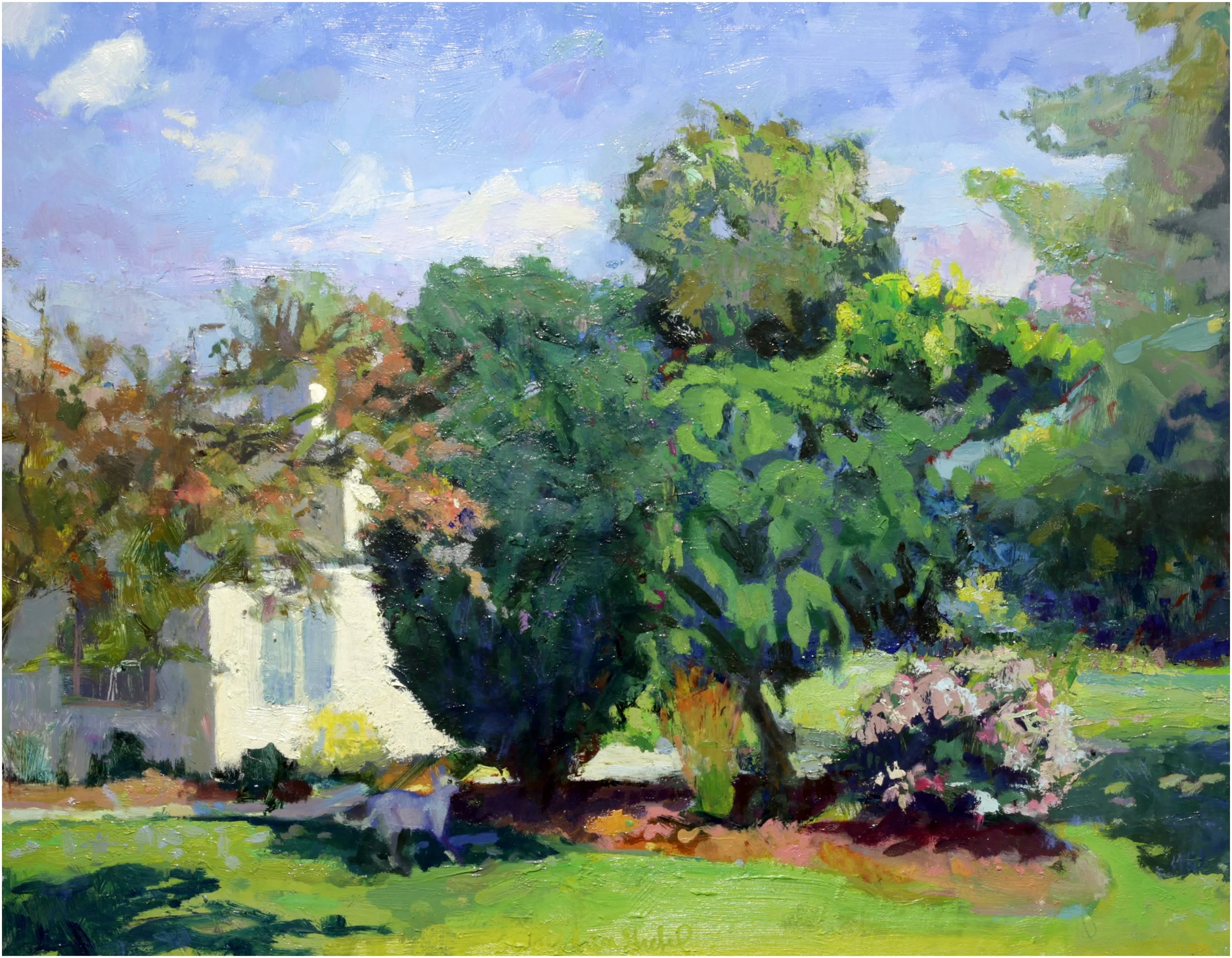
Paula Swaydan-Grebel is a very sensitive artist who integrates directness of touch into her formalist’s practice. Evidence of thought, decision, and correction appear consistently throughout her intimate paintings. Of the three artists in this exhibition, Paula is the most consciously process-oriented, and relentless in her pursuit of formal precision. Like many great artists of the past, Paula prefers working on the formal arrangements over a long period of time, yet intuitively understands when to stop; because of this I felt it important to include examples of her sketchbooks, journals, and ìcolor investigationsî into the exhibition. These objects give a deeper insight into Paulaís creative mind.
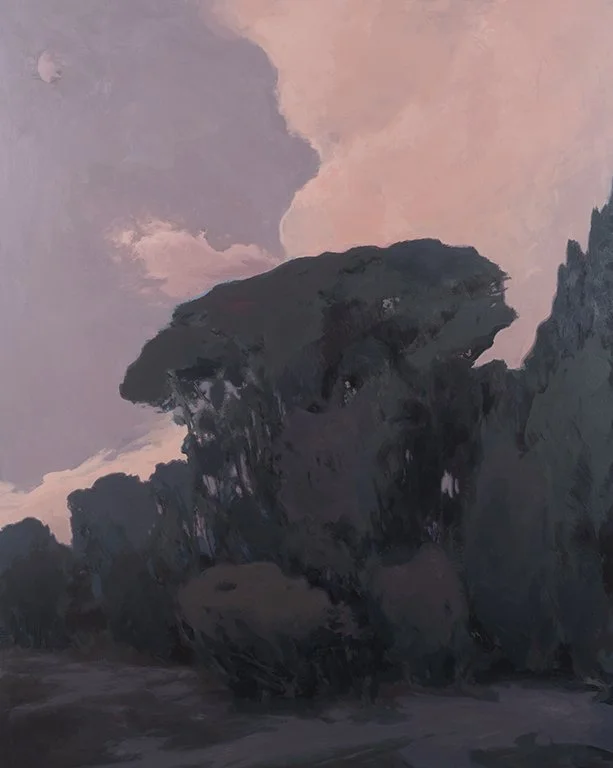
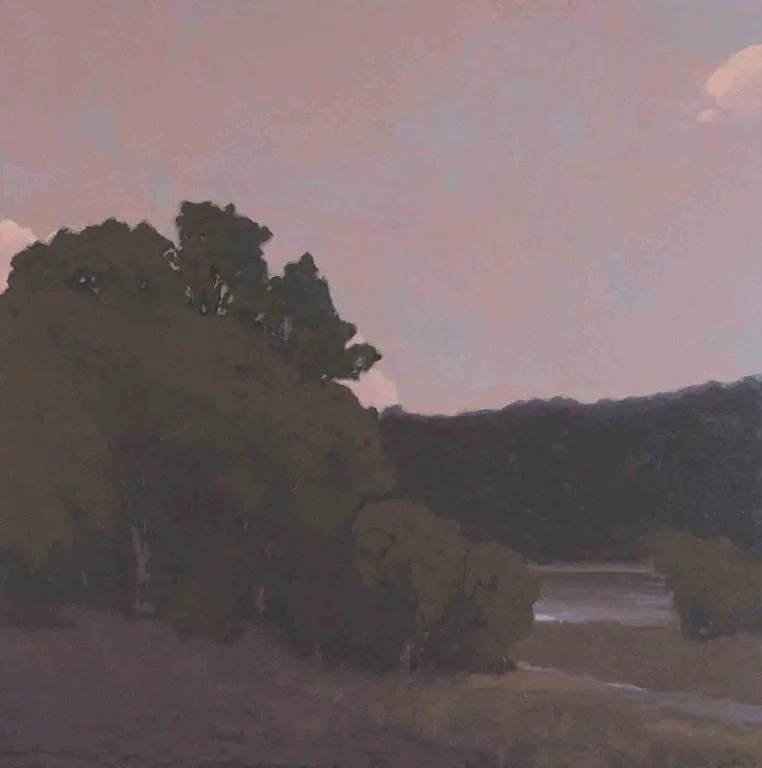
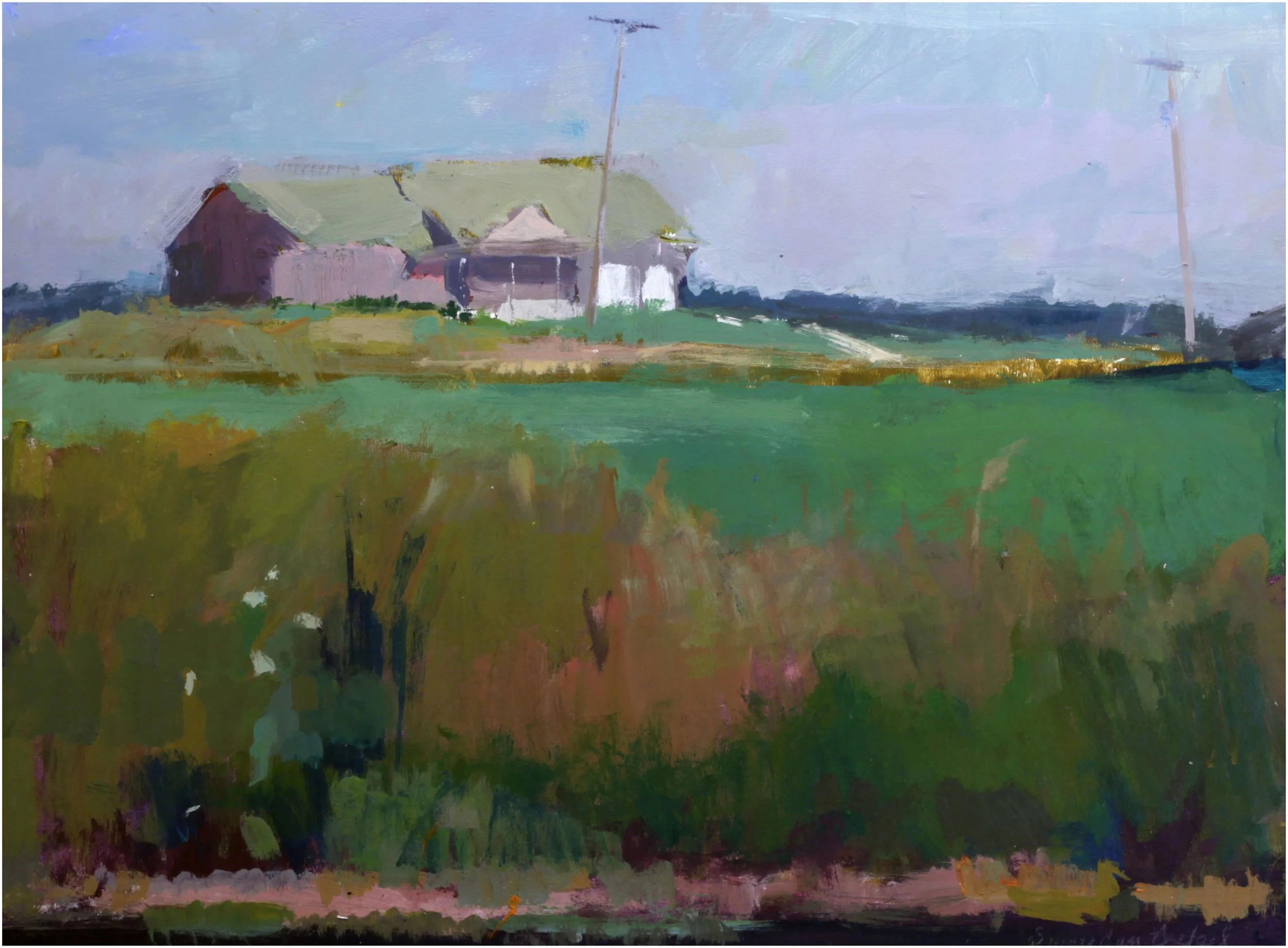
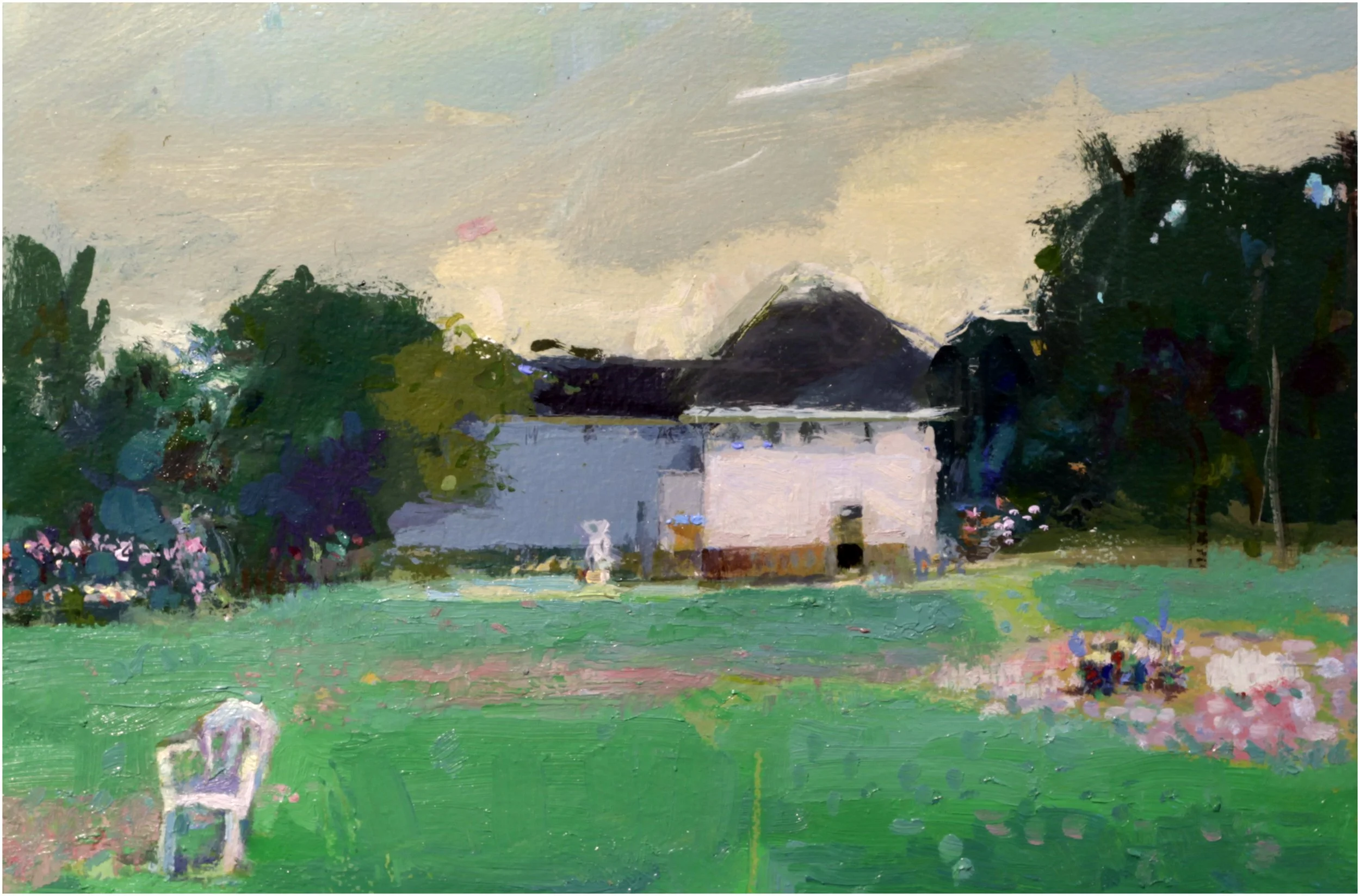
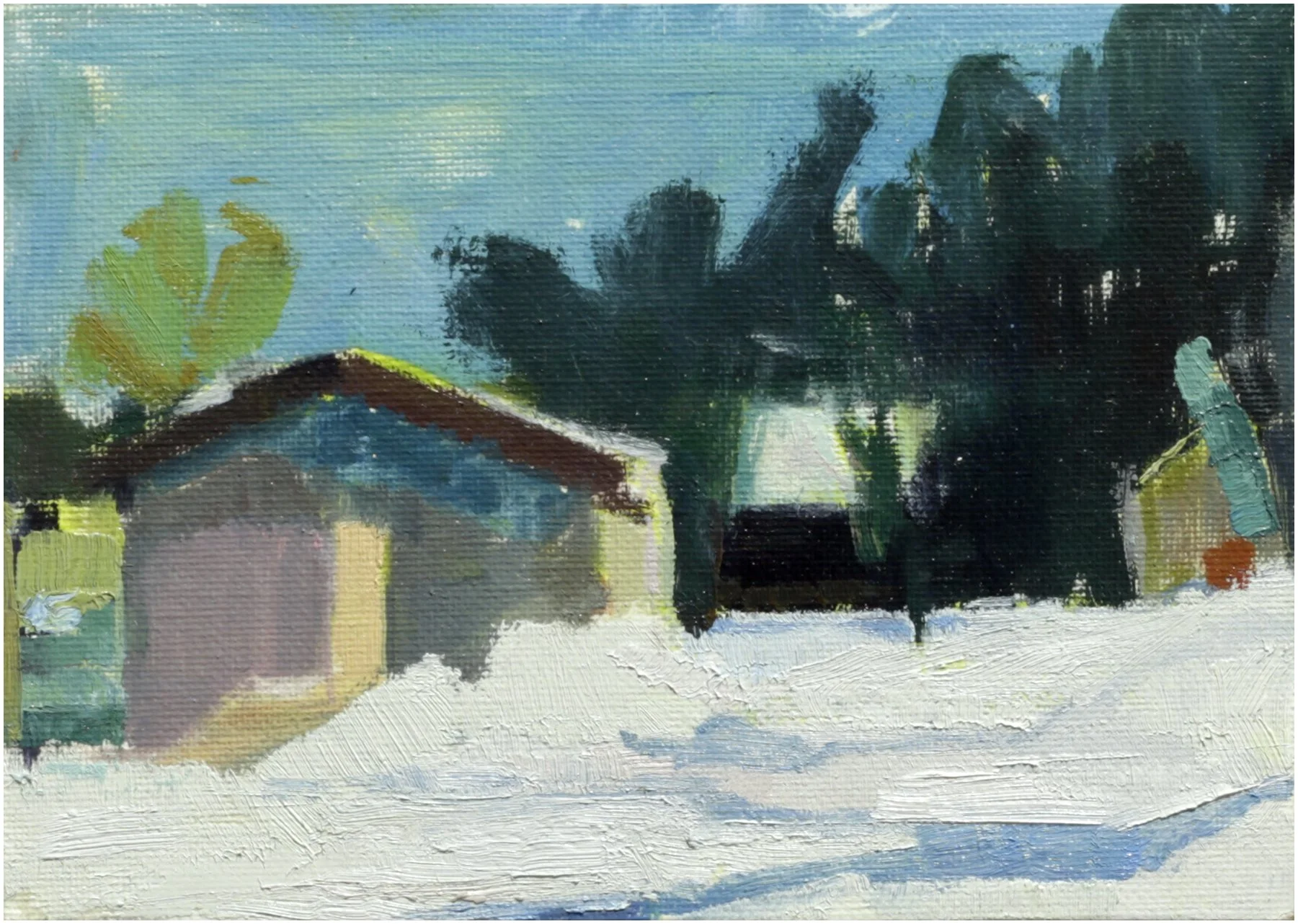
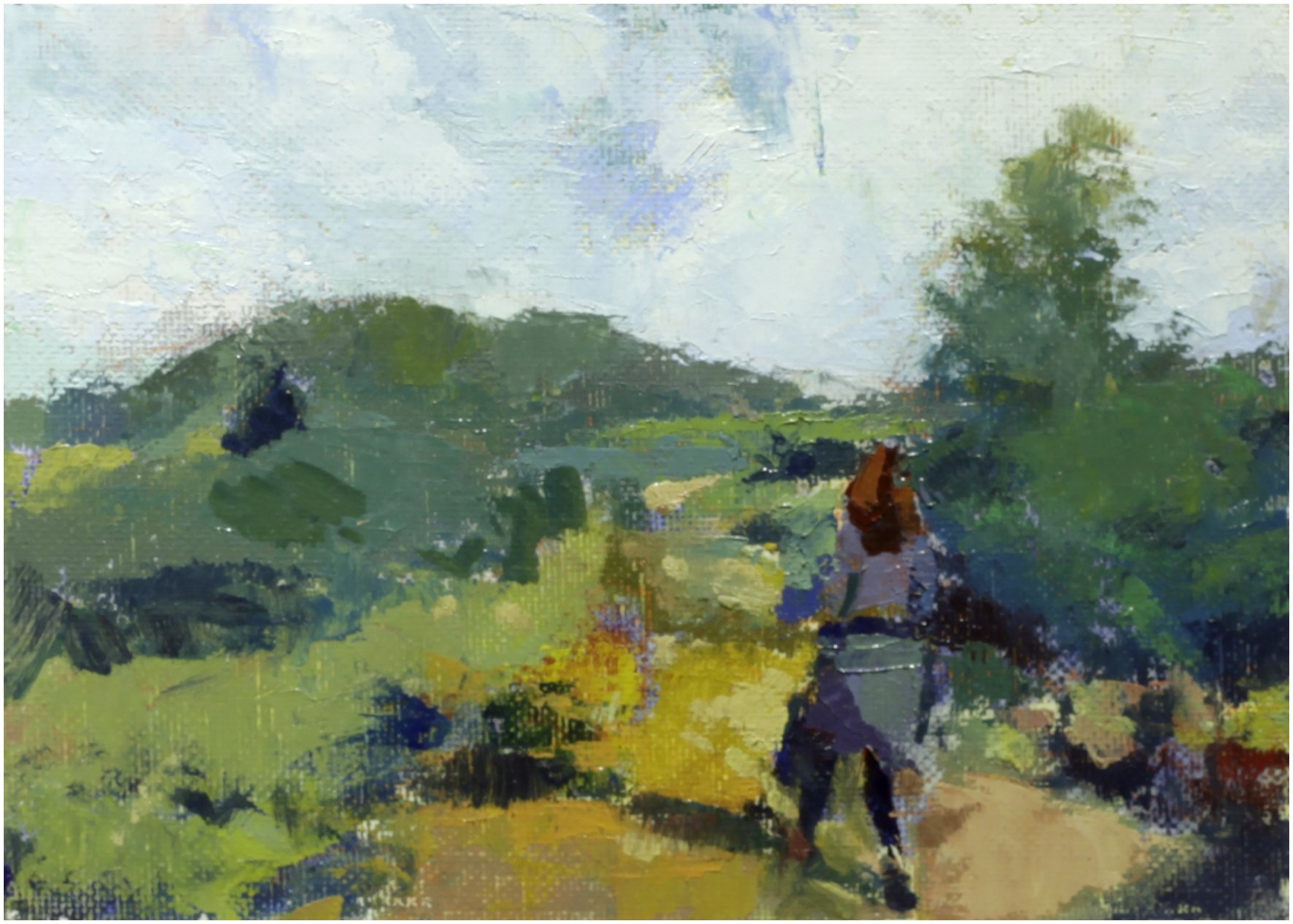
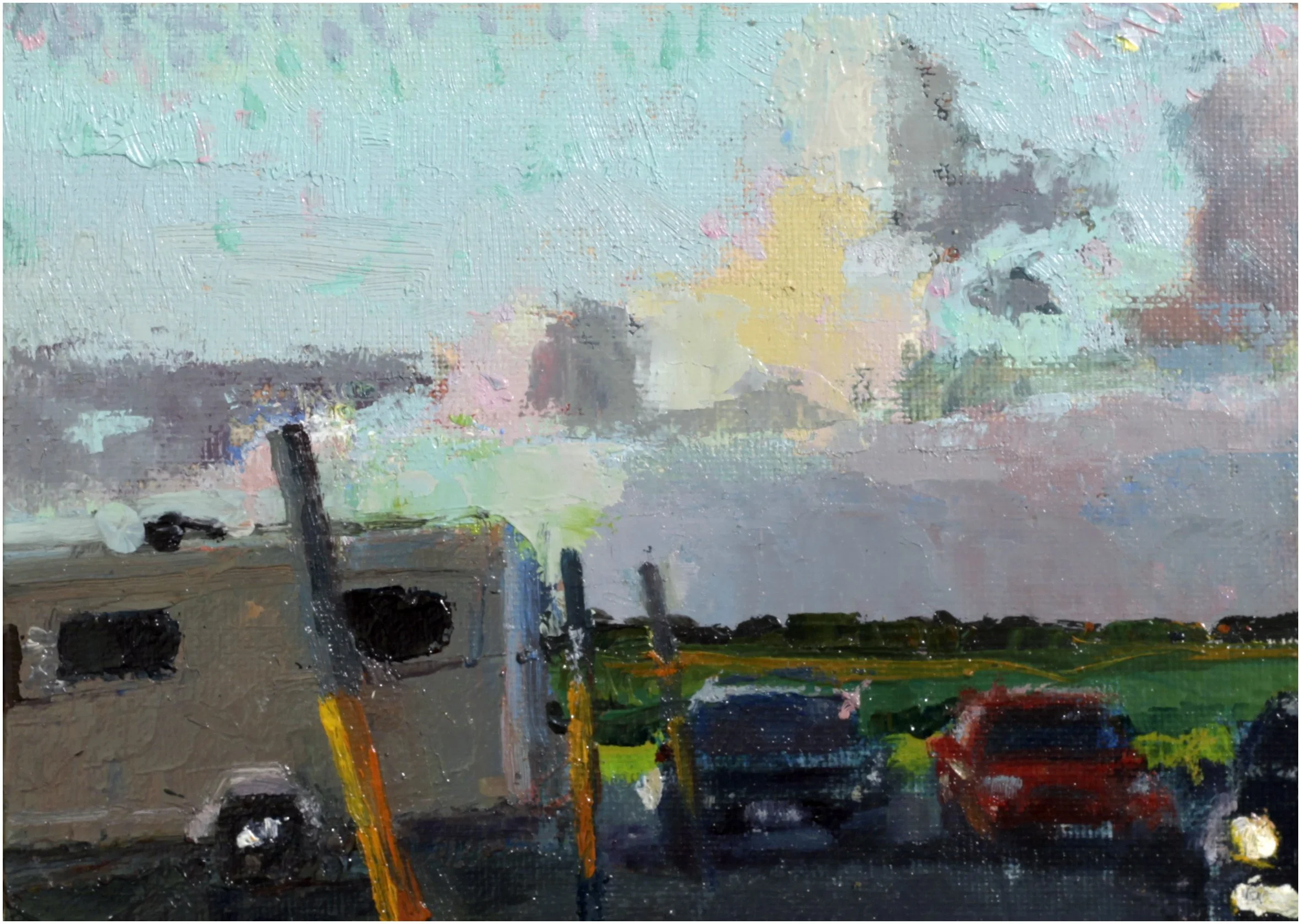
Brian Sindler’s priority as a tonalist is in capturing the mood evoked by a place, rather than its specific features. I have chosen to include many of Brianís gouaches in this exhibition as I feel they represent his functioning at an extremely high artistic level. While small in size, they are substantial ìmood codasî that sum up the visual emotion he senses in a scene. In executing the gouaches, his spur-of-the-moment iterations give them intricate formal qualities that transfer into his larger acrylic paintings.
Curator: Craig Blietz
On Exhibit: September 4–October 11, 2021
Roger Bechtold
Rodger Bechtold was born in 1945 in Michigan. He was raised in central Illinois and has lived in and around Chicago since age eighteen. He nurtured his interests in the visual arts at the American Academy of Art, Chicago and the School of The Art institute of Chicago. Involved in commercial art illustration for many years, he abandoned that pursuit some thirty years ago in favor of painting landscapes full time.
What really ignited his passion for painting was his exposure to mentor Wolf Kahn through the Santa Fe Institute Of Fine Art in Santa Fe, New Mexico as part of the Masters Art Program.
Over time Bechtold has built a solid reputation for being a major contributor to the ongoing dialog in contemporary landscape painting in the Midwest and beyond. His work is expressed with energy, painted with seemingly effortless brushwork, charged with color, and all connected by place and moment.
His paintings, some monumental in size, have been seen in solo and featured exhibitions in museums and prominent galleries as well as in public and private collections across the United States. They have been included in periodicals and books:
The Artist and the American Landscape: Two Centuries of American Landscape Painting, by John Driscoll, Director of the Babcock Gallery, New York, NY
Landscape Painting: Essential Concepts and Techniques for Plein Air and Studio Practice, by Mitchell Albala
100 Artists of the Midwest by E. Ashley Rooney
Rodger Bechtold and his wife, botanical illustrator Glory Bechtold, live and work near Chicago and in Door County Wisconsin.
Paula Swayden-Grebel
Born in California, Paula Swaydan Grebel received her BFA with an emphasis in Figure Drawing and a Minor in Textiles from the California State University of Long Beach. After moving to Wisconsin in the 1990’s where she raised her two children with her husband, Swaydan Grebel has continued her education studying here and abroad with key perceptual painters whose focus is to challenge what an observational painting can be. Her broad knowledge of art history and theory informs her paintings.
Paula teaches painting and drawing workshops throughout the states. You will find her work in public and private collections worldwide. Interviews include the likes of WUWM 89.7FM, Lake Effect. The Italian Art Publication Archivio, Studio Visit Magazine, and The Artist’s Magazine. Paula's paintings have been shown in group exhibitions in Italy and Berlin, Germany. Other shows include Zeuxis' THERE an art space and First Street Gallery, New York. John Michael Kohler Art Center, and The Museum of Wisconsin Art, Wisconsin. The Foyer Gallery, Wichita, Kansas, Brick Gallery, Clarksdale, Mississippi, and Gallery HB, California. She is represented by Tory Folliard Gallery.
Brian Sindler
Brian Sindler was born in Chicago in 1957. He received a bachelor of arts degree from Columbia College in Columbia, Missouri. Working as a musician for years, he did not take up art until he was in his thirties.
Sindler began classes at the American Academy of Art in Chicago in 1996. From 1997 through 2001, he was enrolled at the School of Representational Art, a French-style atelier in Chicago. After graduation, he turned his attention to landscape painting, especially plein air painting. Much of his earlier work was impressionistic in style and clearly influenced by Monet and other French Impressionist masters with a focus on lighting and color. Many of his early landscape paintings were executed in and around his home in the North Shore of Chicago.
In 2004-2005, while pursuing new opportunities for artistic experimentation and growth, Brian entered into what would be considered a more tonalistic phase of his career. Whether in the studio or plein air, his work became more characterized by the use of subdued palette, the flattening of the pictorial space, and a thinner paint application with broad bands of color. Going forward Brian has become very comfortable taking liberties with both form and color.
From 2012 to current, Brian has produced an amazing body of paintings that are clearly influenced by the American Tonalistic movement of the late nineteenth and early twentieth century. This work is somewhat more painterly and less abstract, although the forms are still highly simplified. In these paintings, formal considerations take a back seat to contrasting tonalities and color harmonies. The effect is both poetic and sublime.
Brian Sindler has exhibited widely in individual and group shows. In addition to commercial gallery exhibitions, he has been a regular exhibitor at the Salmagundi Club in New York, the Plein Air Festival in Door County, Wisconsin, and the Easton Plein Air Competition in Easton, Maryland. He has been awarded numerous prizes in these competitions.